
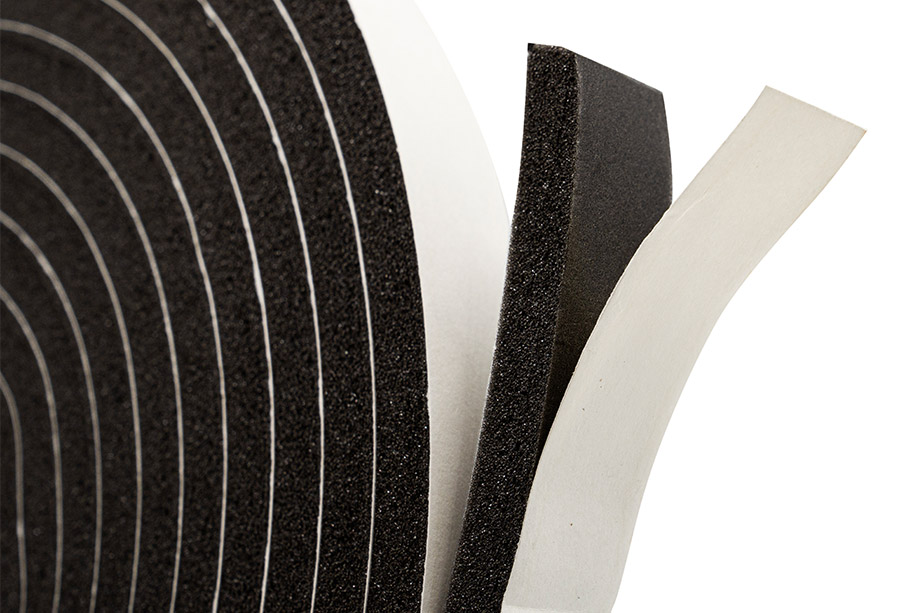
This foam tape density guide explains the differences between low-, medium-, and high-density foam tapes, when to use each, and how to interpret key technical specifications used by engineers and fabricators.
Choosing the right foam tape isn’t just about adhesive strength or thickness. Density plays a critical role in performance. Foam tape density affects compression, durability, load-bearing ability, sealing effectiveness, and long-term reliability.
What Is Foam Tape Density?
Foam tape density refers to how much material exists within the foam structure. It is typically measured as weight per cubic foot and indicates how firm, compressible, and resilient the foam will be.
In simple terms:
- Lower density = softer and more compressible
- Higher density = firmer and more load-bearing
Density directly impacts:
- Compression resistance
- Recovery after compression
- Vibration dampening
- Seal longevity
- Structural performance
Understanding density helps prevent premature failure and ensures consistent performance.
Foam Tape Density Guide: LOW Density
Characteristics:
- High compressibility
- Excellent gap filling
- Lightweight
- Lower load capacity
- Strong sealing performance
Typical Uses:
- Weatherstripping
- Residential window sealing
- Air and dust sealing
- HVAC gasketing
Best when: sealing uneven surfaces where flexibility is critical.
Foam Tape Density Guide: MEDIUM Density
Characteristics:
- Controlled compression
- Better durability
- Moderate load capacity
- Stable sealing performance
Typical Uses:
- Residential glazing
- Panel mounting
- Transportation assemblies
- General gasketing
Best when: you need both sealing and moderate structural performance.
Foam Tape Density Guide: HIGH Density
Characteristics:
- Minimal compression
- High load-bearing capacity
- Strong recovery
- Long service life
Typical Uses:
- Structural spacer tape
- Curtain wall glazing
- Heavy panel mounting
- Industrial assemblies
Best when: precision spacing and durability are required.
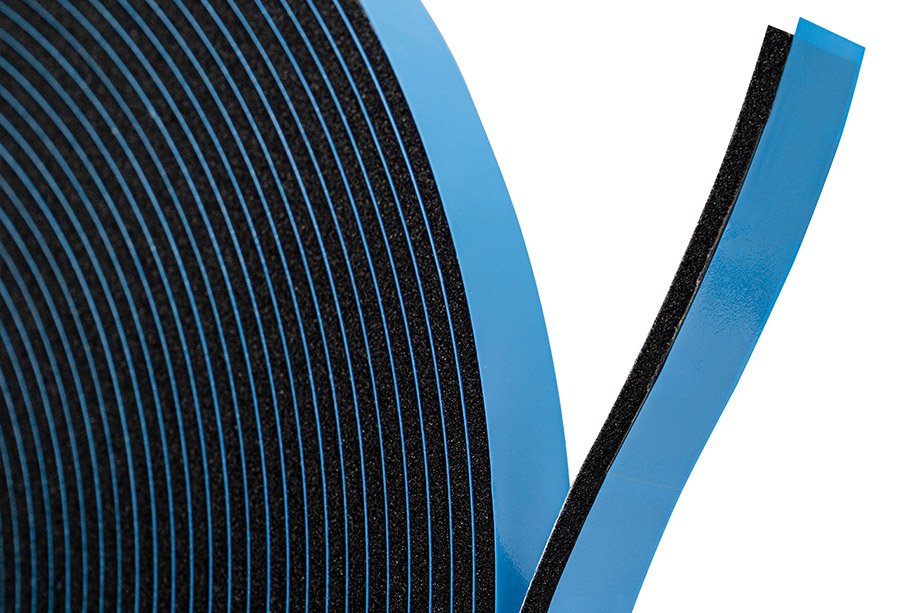
Technical Data Explained
Understanding foam tape specifications allows engineers to predict real-world performance. In the next section of our foam tape density guide, we explain the most important metrics you’ll see on technical data sheets.
1. Force to Compress @ 25% (ASTM D-1667)
Force to Compress measures how much pressure is required to compress foam to 25% of its original thickness.
This test is commonly performed using standards from ASTM International.
What it tells you:
- How firm the foam is
- How much clamping force is required
- Whether the foam will maintain spacing
Typical ranges:
- Low density: Low force required — easily compressed
- Medium density: Moderate force — controlled compression
- High density: Higher force — maintains thickness under load
Why it matters:
If force to compress is too low, the foam may collapse.
If too high, it may not seal properly.
2. PSI Rating
PSI (pounds per square inch) indicates how much pressure the foam can withstand before significant deformation occurs.
What PSI represents:
- Load-bearing capability
- Resistance to crushing
- Suitability for mounting applications
General guidelines:
- Low density: Lower PSI — best for sealing
- Medium density: Balanced PSI — versatile
- High density: Higher PSI — structural support
Higher PSI foams are commonly used where panels, glass, or components apply continuous pressure.
3. kPa Rating (Kilopascals)
kPa is the metric equivalent of pressure measurement and is widely used in engineering specifications globally.
1 PSI ≈ 6.89 kPa
What kPa means in foam tape:
- Resistance to compression
- Required installation pressure
- Performance under sustained loads
Why manufacturers list both
- PSI for North American specifications
- kPa for international engineering standards
Higher kPa values indicate a firmer foam that maintains thickness and spacing.
4. Compression Set (25%)
Compression Set measures how much thickness a foam permanently loses after being compressed for a specified time and temperature.
It is usually expressed as a percentage.
Compression Set = % loss from original height after release
Example:
- Original thickness: 3 mm
- After compression: recovers to 2.7 mm
- Compression set: 10%
What it tells you:
- Long-term durability
- Seal longevity
- Ability to recover after load
Typical interpretation
- Lower % = better recovery
- Higher % = greater permanent deformation
High-density foams typically show lower compression set in demanding environments.
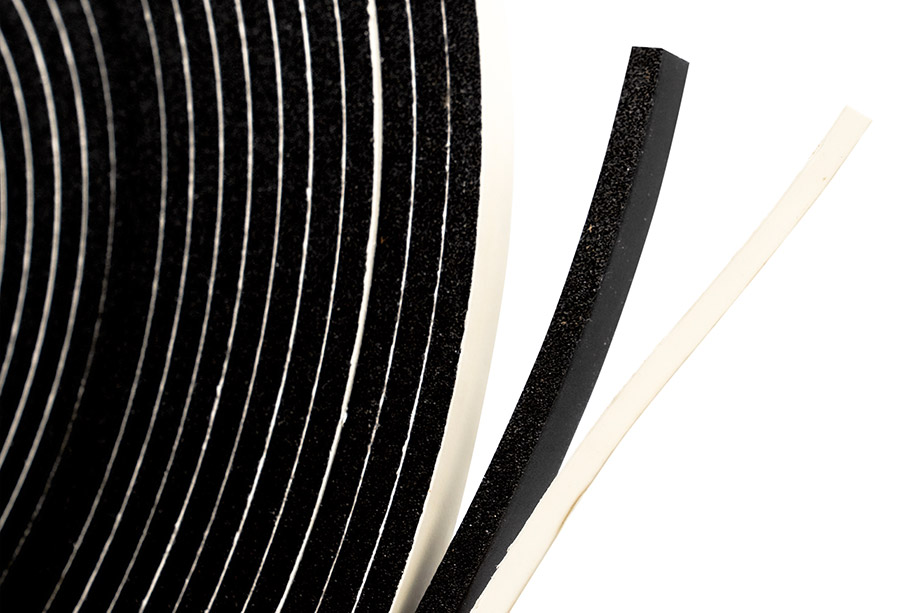
How Density Influences These Metrics
Density affects every technical property:
| Property | Low Density | Medium Density | High Density |
|---|---|---|---|
| Force to Compress | Low | Moderate | High |
| PSI / kPa | Lower | Moderate | Higher |
| Compression Set | Higher | Moderate | Lower |
| Load Capacity | Low | Medium | High |
Selecting density is essentially selecting how the foam behaves under pressure over time.
Foam Tape Density Guide: Density vs Thickness
Density and thickness must be evaluated together:
- Thick low-density foam = excellent sealing
- Thin high-density foam = precise spacing
- Medium density = balanced performance
Professionals consider:
- Surface variation
- Required compression percentage
- Environmental exposure
- Weight/load requirements
Common Selection Mistakes
- Using soft foam where structural spacing is required
- Choosing high density that prevents proper sealing
- Ignoring compression set in long-term assemblies
- Overlooking installation pressure requirements
When Custom Converting Matters
Many assemblies require more than standard foam specifications. Custom converting allows:
- Exact density selection
- Precision slit widths
- Layered constructions
- Adhesives matched to substrates
This ensures foam performance aligns with real-world conditions.
Final Thoughts
Density is one of the most important — and most misunderstood — aspects of foam tape performance.
As this foam tape density guide shows:
- Force to compress indicates installation pressure
- PSI and kPa describe load resistance
- Compression set predicts long-term durability
Low density excels at sealing, medium density provides versatility, and high density supports structural applications.
Choosing the correct density — supported by technical data — improves assembly reliability, reduces failures, and extends product life.
We Cut Tape!
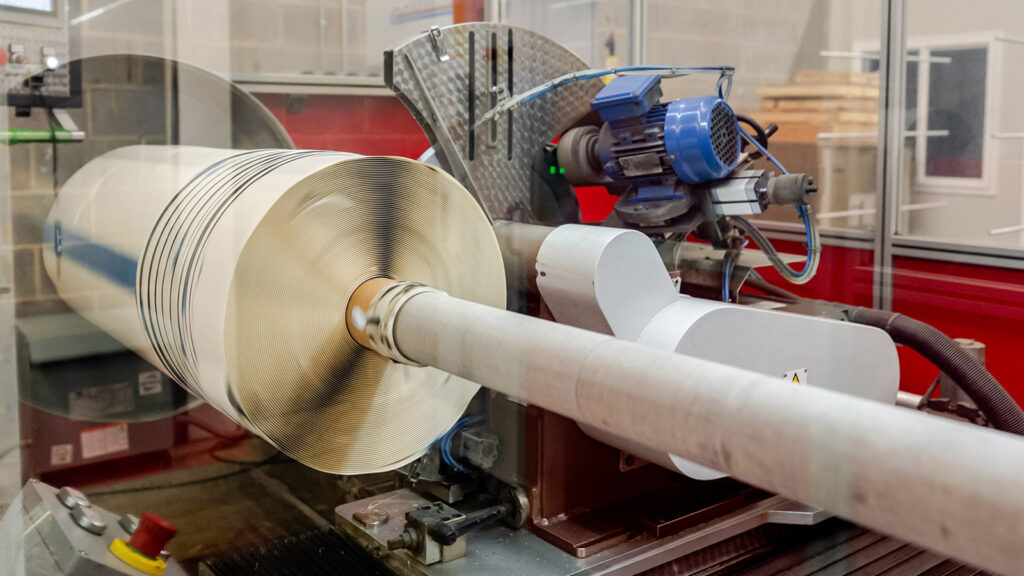
At Capital Tape, we provide a full range of commercial and industrial tapes cut to standard and custom widths, to-order! We’ll even ship you samples so that you can see, feel, and test the quality of our high-grade tapes.
Looking for more support? Check out these helpful links:
DATA SHEETS | ARTICLES | FREQUENTLY ASKED QUESTIONS | TROUBLESHOOTING
Follow Capital Tape on LinkedIn for news.