

How much weight can mounting tape hold? We get this question often. Mounting tape has become a popular alternative to screws, rivets, and mechanical fasteners across construction, transportation, signage, retail displays, and industrial manufacturing.
The answer depends on several important factors including the type of tape, surface material, environmental conditions, and how the load is applied.
This guide explains how mounting tape works, what affects holding strength, and how to choose the right tape for your application.
What Is Mounting Tape?
Mounting tape is a pressure-sensitive adhesive tape designed to permanently or semi-permanently bond materials together without traditional fasteners.
Many industrial mounting tapes use foam carriers or acrylic foam cores that provide:
- Strong adhesion
- Gap filling
- Vibration dampening
- Stress distribution
- Clean appearance without visible hardware
High-performance mounting tapes are commonly used to bond:
- Metal
- Glass
- Plastics
- Composite panels
- Signage materials
- Architectural components
How Mounting Tape Supports Weight
Mounting tape does not simply “stick” two surfaces together. Industrial-grade tapes distribute force across the entire bonded area.
Unlike screws or rivets that concentrate stress at specific points, mounting tape spreads load evenly across the bond line.
This helps:
- Reduce stress concentration
- Minimize vibration transfer
- Prevent cracking around fastener holes
- Improve aesthetics
- Create cleaner assemblies
The amount of weight mounting tape can hold depends on both adhesive strength and tape construction.
Factors That Affect Weight Capacity
Tape Type
Not all mounting tapes are designed for the same applications.
For example:
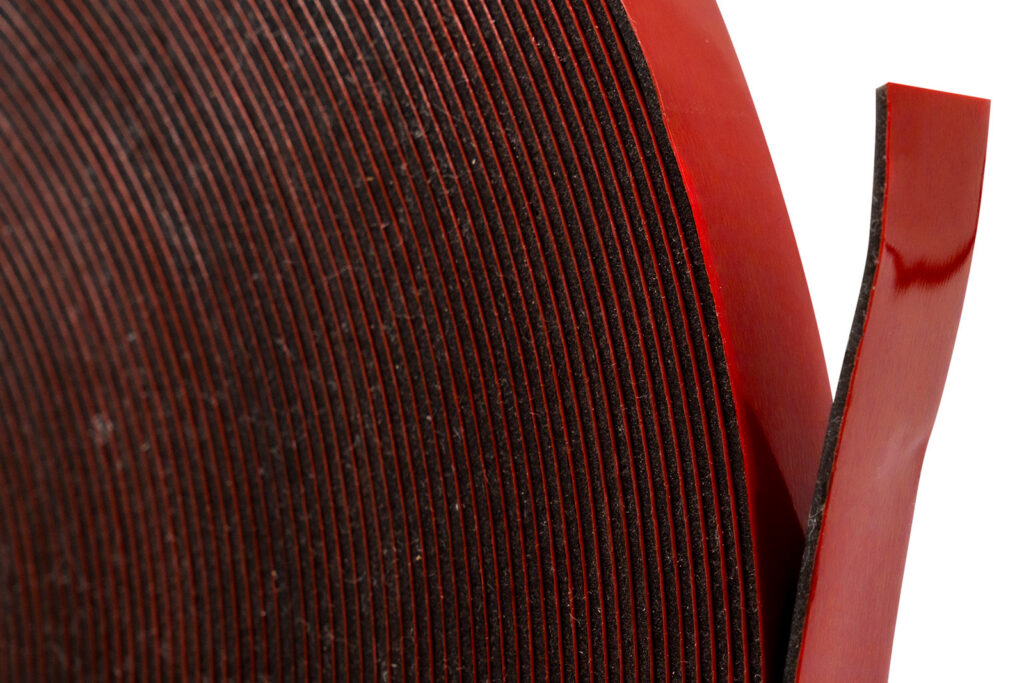
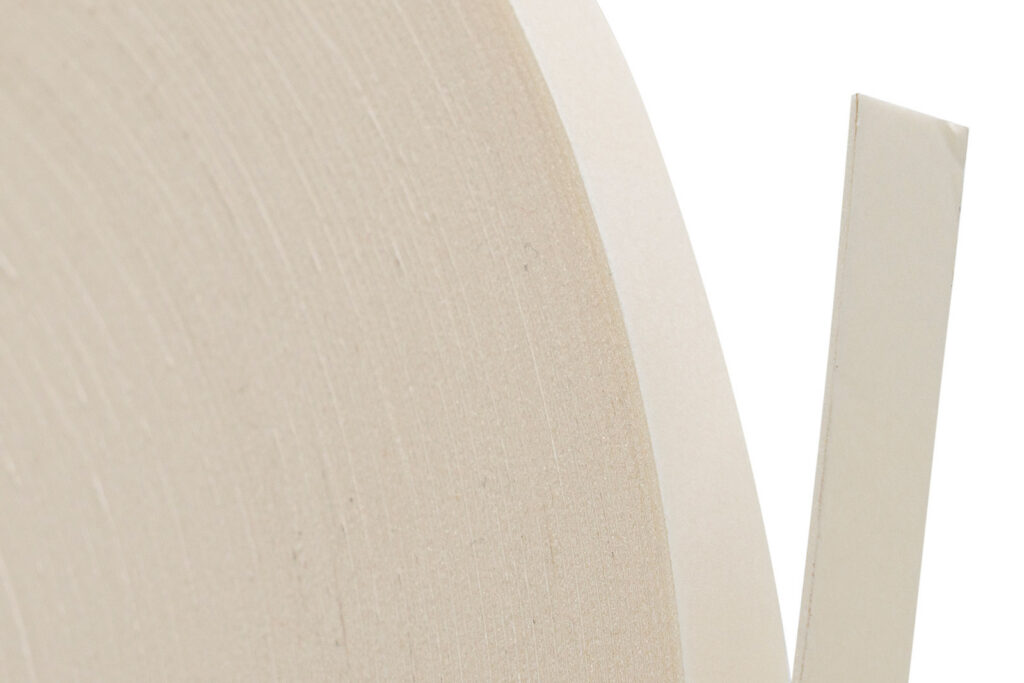
- Polyethylene foam tapes are commonly used for light-duty mounting and gasketing
- Acrylic foam tapes provide much higher long-term bonding performance
- Ultra-high bond tapes are designed for structural and industrial applications
The tape construction plays a major role in overall load capability.
Surface Material
The surface being bonded has a significant impact on holding strength.
Smooth, high-energy surfaces generally provide stronger adhesion, including:
- Aluminum
- Stainless steel
- Glass
- Painted metals
More difficult surfaces include:
- Powder coatings
- Certain plastics
- Textured substrates
- Low-surface-energy materials
Surface preparation is critical for maximum performance.
Bond Area
One of the most important factors is total bonding area.
A larger bonding surface distributes weight more effectively and improves load capacity.
For example:
- A small square of tape may support lightweight trim
- A full-length strip distributes force across a larger area and supports substantially more load
More contact area generally equals greater holding strength.
Shear vs Peel Forces
How weight is applied matters just as much as how much weight is involved.
SHEAR LOAD
Shear occurs when force is applied parallel to the surface.
This is where mounting tape performs best.
Examples:
- Wall-mounted panels
- Signage
- Attached trim pieces
PEEL LOAD
Peel force pulls the tape away from the surface edge.
This creates much more stress on the bond line and reduces holding strength.
Examples:
- Hanging objects outward from a surface
- Flexing materials
- Unsupported edges
Mounting tape typically performs far better in shear than peel applications.
Environmental Conditions
Temperature, moisture, and UV exposure can all influence tape performance.
High-quality acrylic foam tapes are engineered to withstand:
- Outdoor weather
- Temperature cycling
- Moisture exposure
- UV radiation
Lower-performance tapes may lose adhesion more quickly in demanding environments.
Choosing the correct tape for the environment is essential for long-term reliability.
How Much Weight Can Mounting Tape Hold?
There is no single universal weight rating because applications vary significantly.
However, industrial mounting tapes can often support surprisingly heavy loads when:
- Properly specified
- Applied to compatible surfaces
- Installed correctly
- Given adequate bond area
High-performance acrylic foam mounting tapes are regularly used in applications involving:
- Architectural panels
- Transportation assemblies
- Exterior signage
- Metal fabrication
- Glass bonding systems
In many cases, mounting tape replaces screws, rivets, and welds entirely.
Common Applications for Mounting Tape
Architectural Panels — Provides clean bonding without visible fasteners.
Signage & Displays — Mounts graphics and panels while reducing installation time.
Transportation — Used for trim attachment, panel mounting, and vibration control.
Retail Fixtures — Creates smooth, finished appearances without hardware exposure.
Glass & Metal Bonding — Allows for strong, continuous bonding across surfaces.
Common Mistakes That Reduce Holding Strength
Insufficient Surface Preparation — Dust, oil, or moisture can dramatically reduce adhesion.
Not Allowing Bond Build — Many acrylic adhesives continue building strength over time after application.
Too Little Bond Area — Small pieces of tape may not distribute force adequately.
Using the Wrong Tape Type — General-purpose foam tape may not be suitable for structural applications.
Applying Stress Too Early — Premature loading can weaken the final bond.
Why Thickness Matters
Foam tape thickness affects performance in several ways.
Thicker tapes can:
- Conform to uneven surfaces
- Absorb vibration
- Compensate for thermal expansion
However, thicker does not always mean stronger.
The correct thickness depends on:
- Surface variation
- Load type
- Material movement
- Environmental conditions
The Advantage of Custom Converted Mounting Tape
Working with a converting partner allows mounting tape to be tailored to the application.
Custom converting can provide:
- Precision slit widths
- Die-cut shapes
- Application-specific adhesives
- Optimized foam densities
- Reduced installation waste
This improves both assembly efficiency and long-term performance.
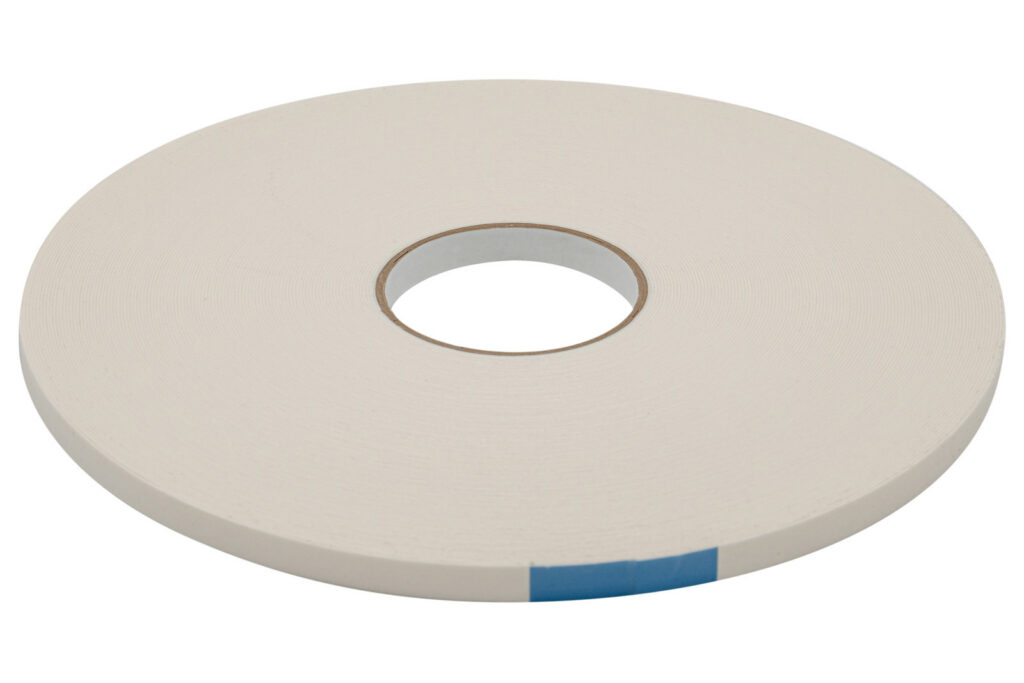
So, how much weight can mounting tape hold?
The real answer depends on:
- Tape construction
- Surface compatibility
- Bond area
- Load direction
- Environmental conditions
- Installation quality
When properly selected and applied, industrial mounting tape can support substantial loads while replacing mechanical fasteners in many applications.
Modern acrylic foam and ultra-high bond tapes provide strong, durable bonding solutions that improve aesthetics, reduce assembly time, and simplify installation across a wide range of industries.
For demanding applications, working with an experienced tape converter helps ensure the right mounting tape is matched to the job for maximum performance and reliability.
QUESTIONS FOR US?
For specific questions about your mounting tape or acceptable weight loads, contact us at (216) 292-3455 or email service@capitaltape.com. Our pros are happy to offer insight into your tape inquiries.
Looking for more support? Check out these helpful links:
DATA SHEETS | ARTICLES | FREQUENTLY ASKED QUESTIONS | TROUBLESHOOTING
Follow Capital Tape on LinkedIn